
Be yourself; Everyone else is already taken.
— Oscar Wilde.
The R1TTour.com blog is my creative outlet and a way to share. My R1T is my pick up truck and a symbol of the liberty I have enjoyed for the past five years and plan to enjoy going forward.
Trying to live well
Be yourself; Everyone else is already taken.
— Oscar Wilde.
The R1TTour.com blog is my creative outlet and a way to share. My R1T is my pick up truck and a symbol of the liberty I have enjoyed for the past five years and plan to enjoy going forward.
By Jim Dickens, February 2026
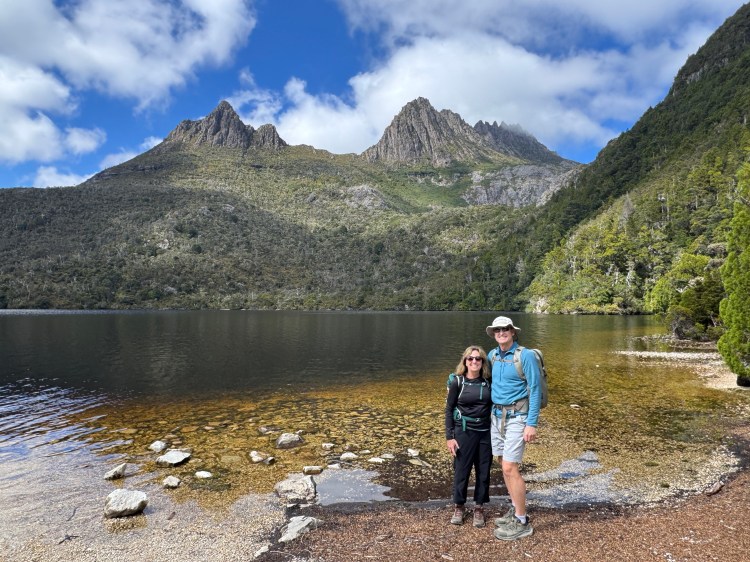
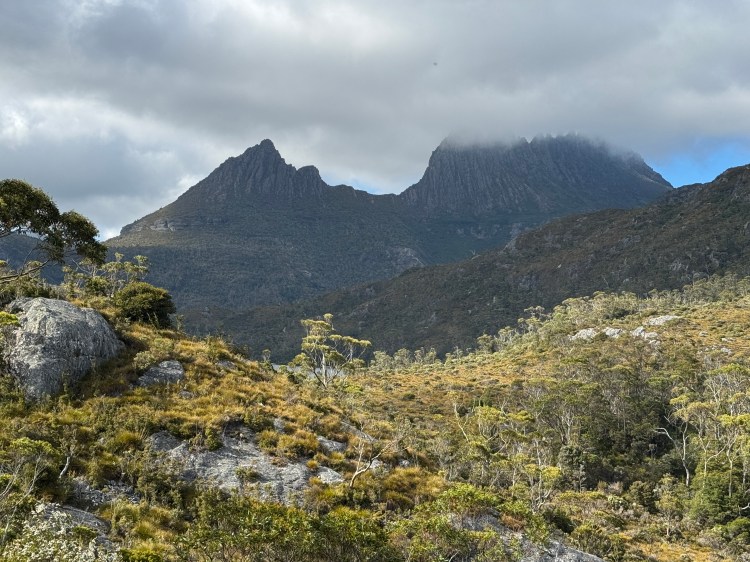
I think the pundits are wrong about the need for more babies. We visited Tasmania and glimpsed a wonderful world with a pristine environment. With the world human population growing from living longer and still mostly living by extractive versus sustainable means, I’d first advocate for transformation to sustainability among other things.
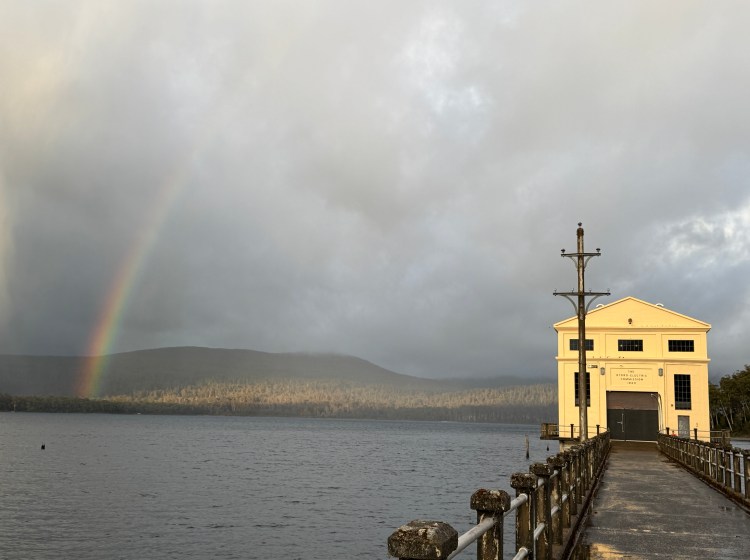
For context, Tasmania is a state of Australia and an island south of the mainland. It is forested and has a low population, 500,000, relative to its land mass, the size of West Virginia. The climate is temperate and the soil is fertile. It is carbon neutral with relatively benign agricultural practices, abundant wild life and protected wilderness and sufficient renewable energy. The cities are manageable and unclogged with traffic.
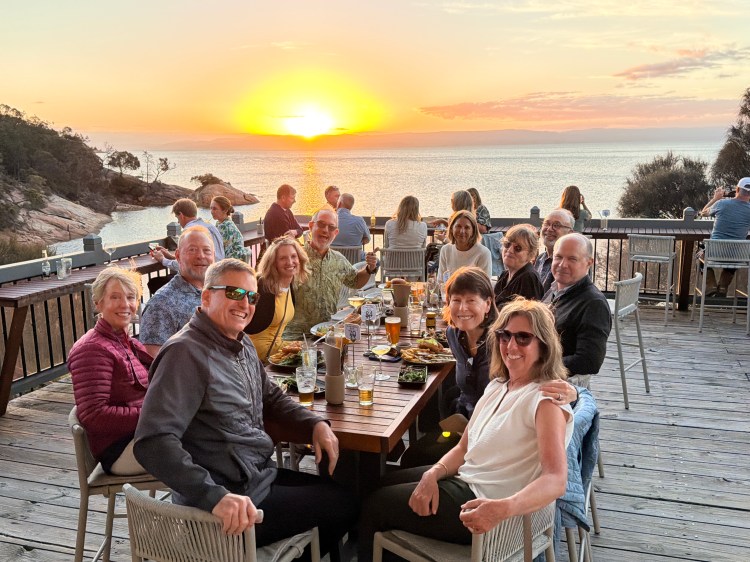
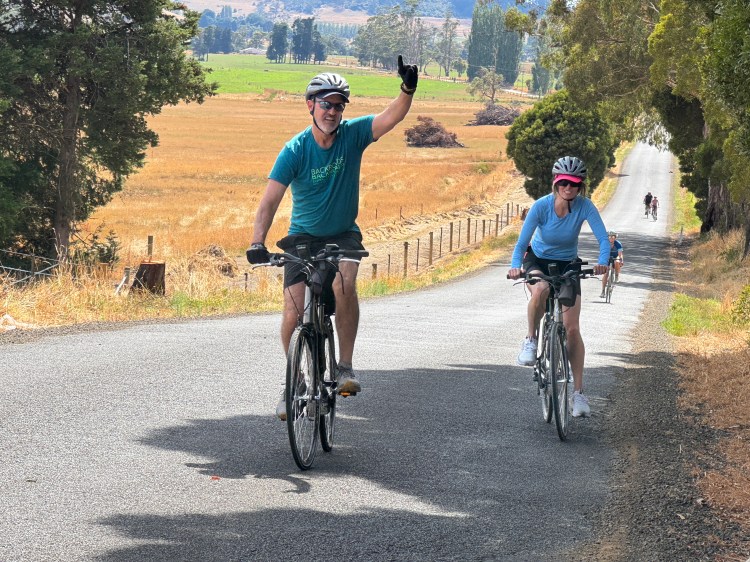
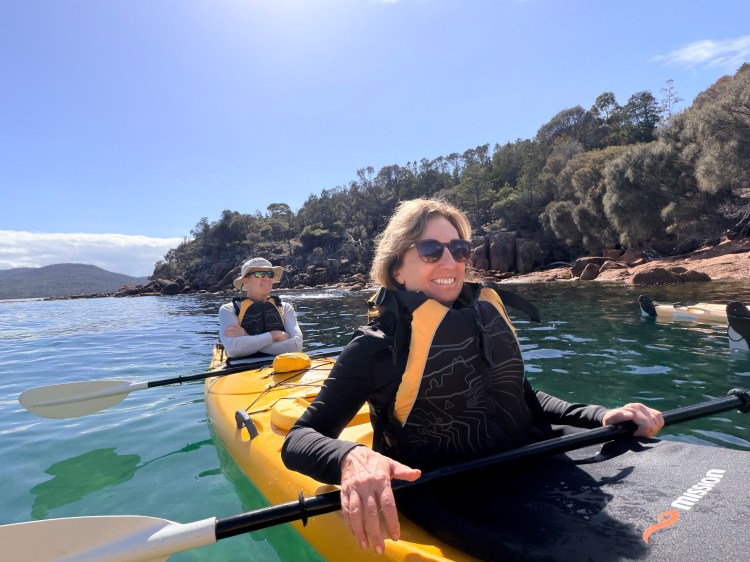
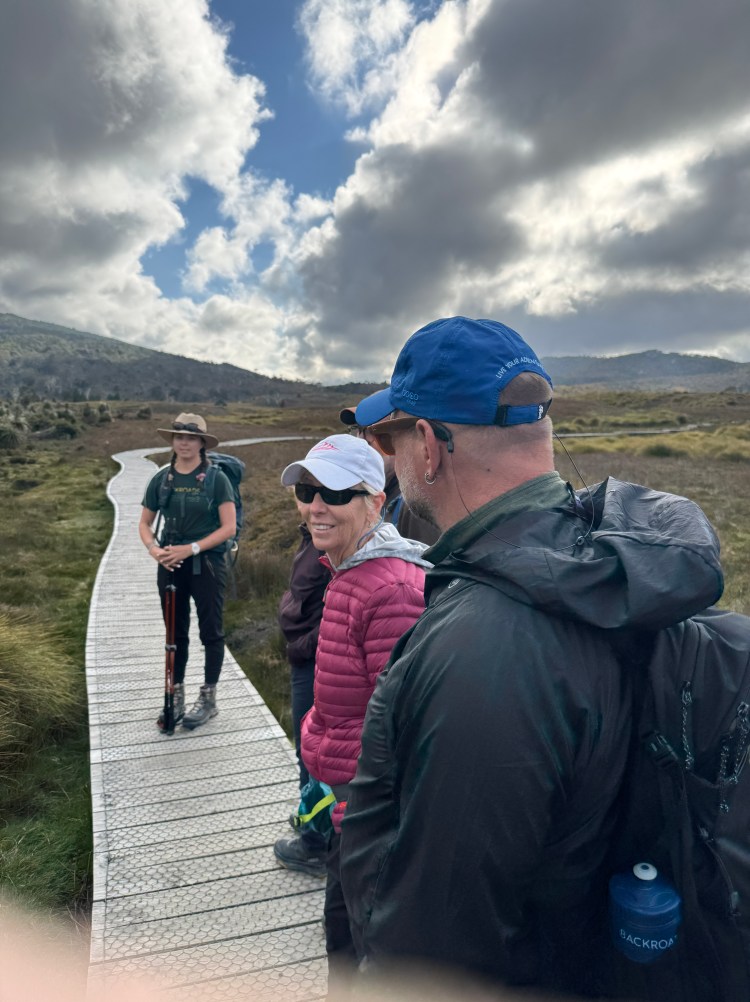
Lori and I with 4 good friends joined a group tour of supported biking, hiking and kayaking with luxury dining and lodging. We started north in Launceston and meandered down to Hobart in the south. We biked three days, hiked three days and kayaked with a staff that told us what we were doing and seeing. We had local meals with hosts telling us their stories, at a regenerative farm, a restored movie house, and a converted presbyterian church.
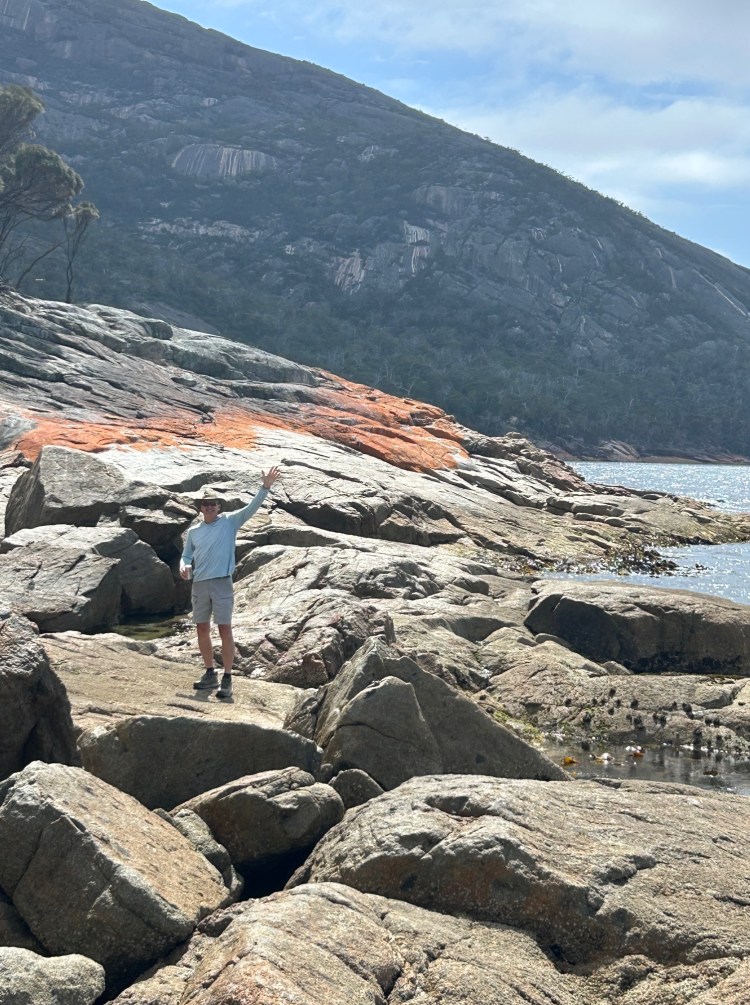
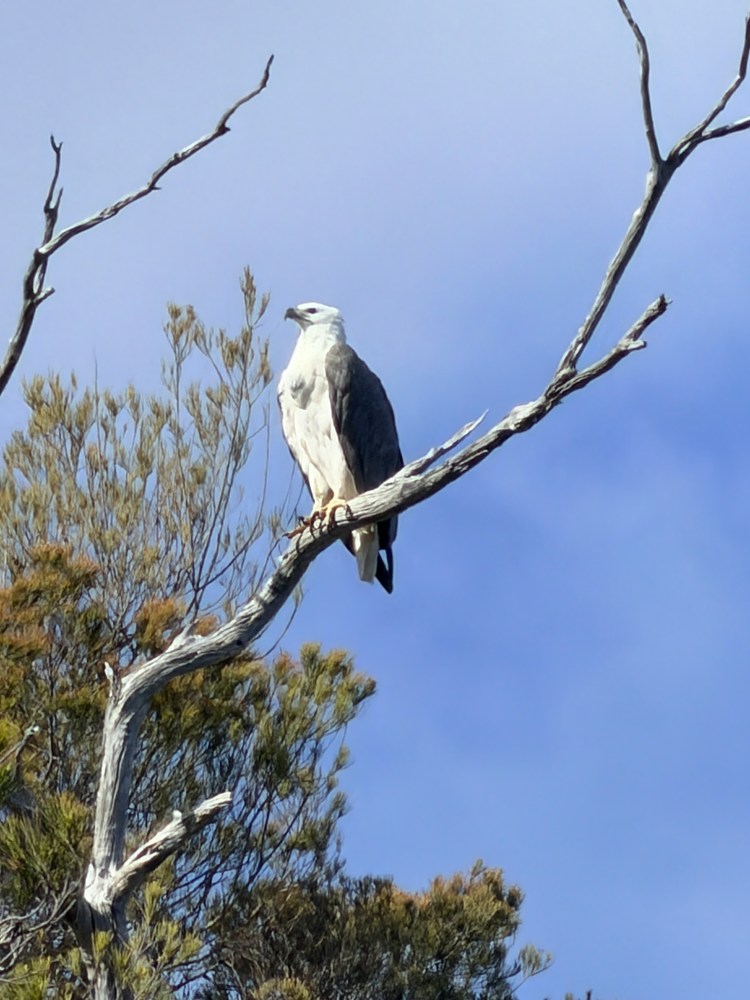
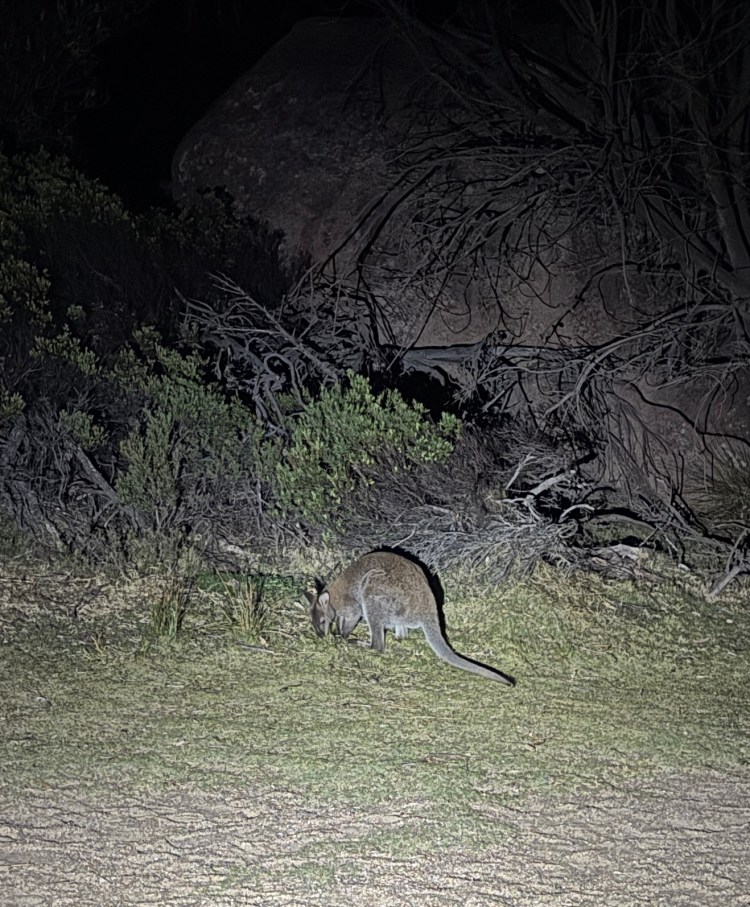
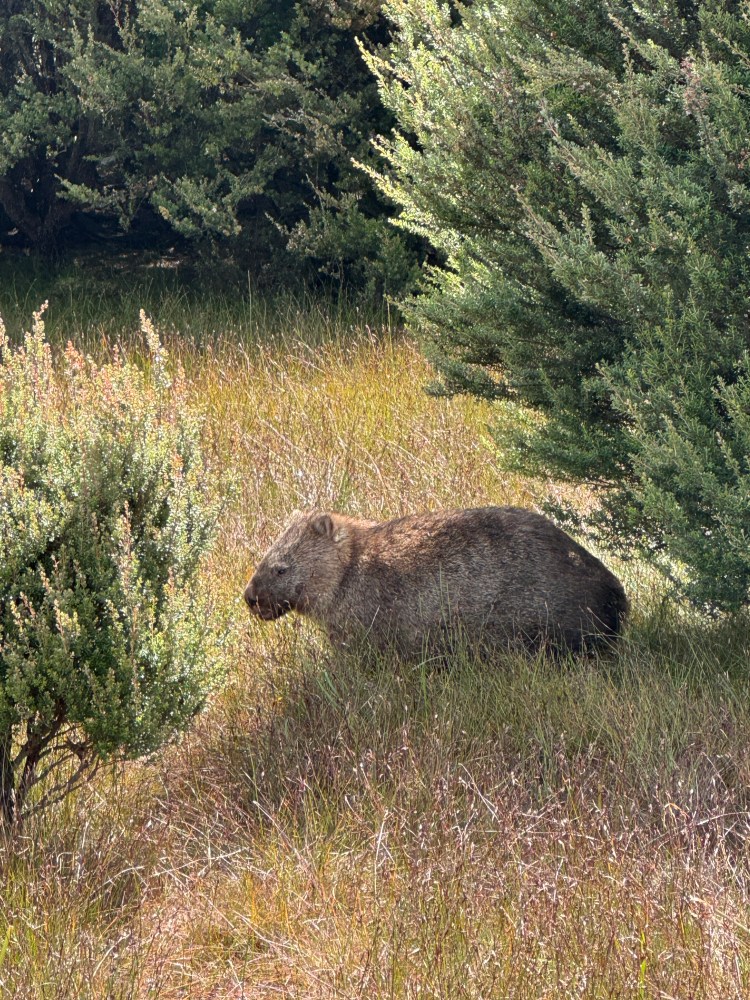
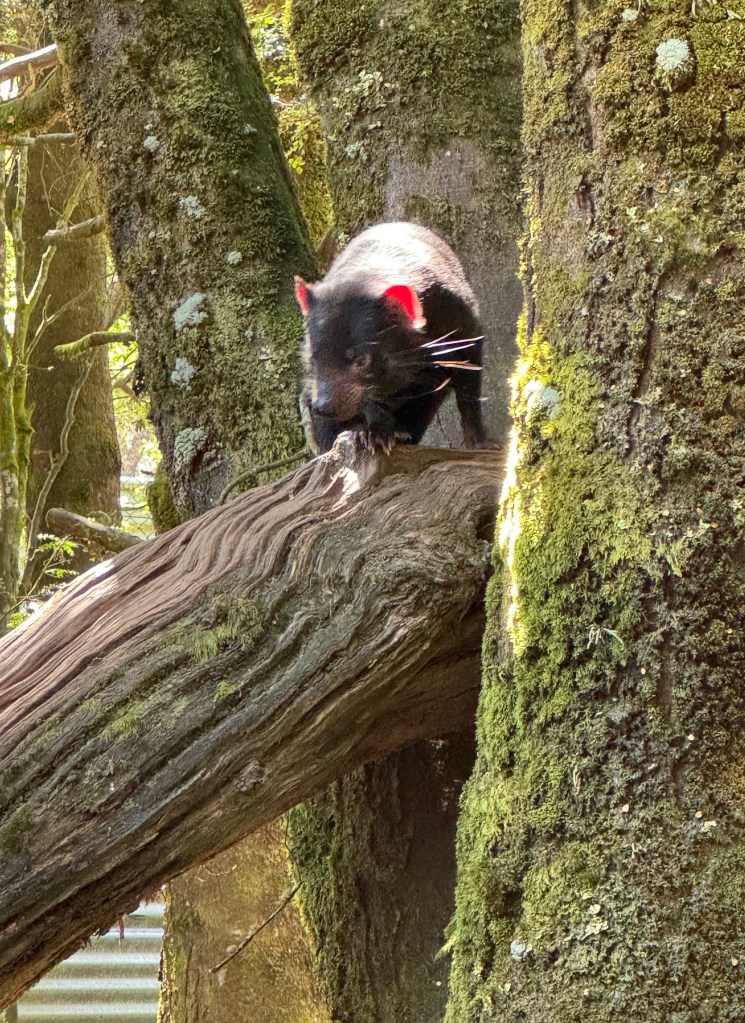
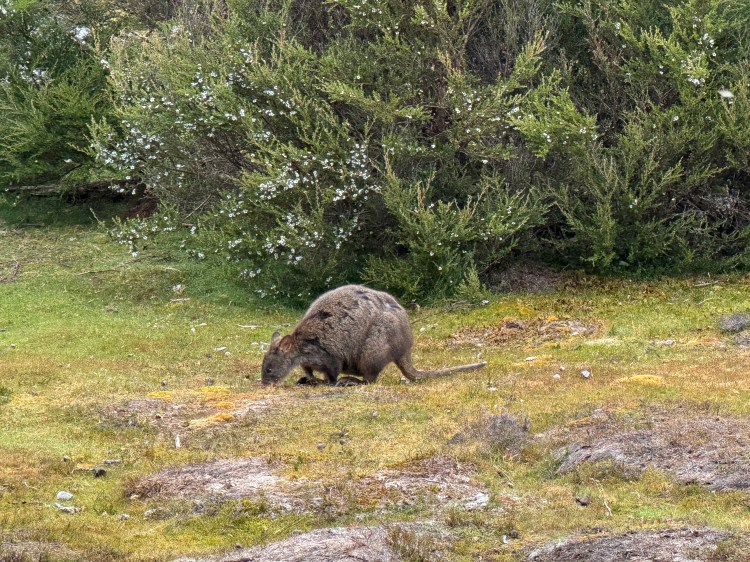
The lake shores and beaches were uncrowded without docks and high rises. The air is the cleanest in the world and the waters and forests are teaming with strange animals and plants compared to our northern hemisphere specimens. The topography is gentle and manageable.
We’d love to comeback and just explore some more on our own. In an apocalypse, Tasmania is touted as a great place to survive. I’d rather we transform our world in this direction than increasing our population and wearing out our environment.
by Jim Dickens January 2026
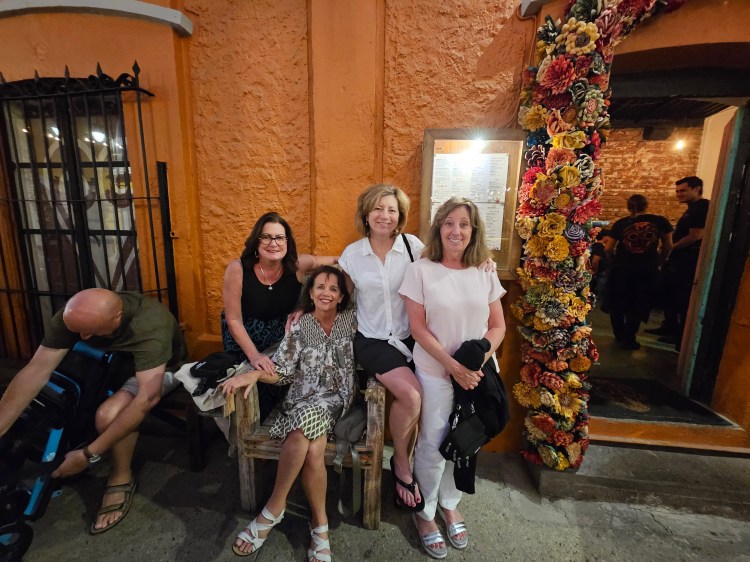
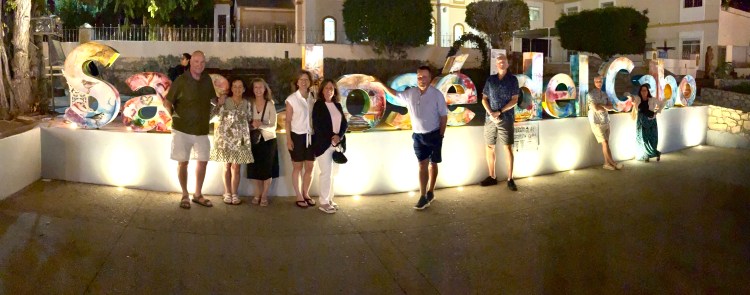
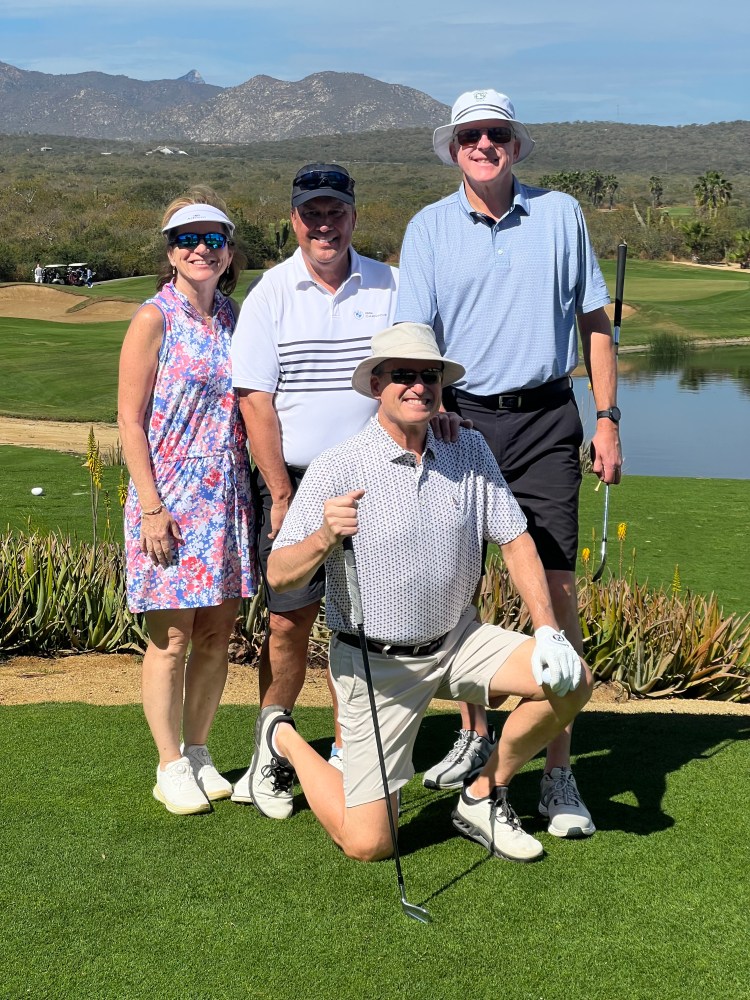
I learned on my recent trip to Bhutan that some Himalayan Buddhists practice thinking about death 3 times a day. It helps you live a better life. I imagine it helps prioritize what you do and how you appreciate. It felt true as 10 old friends headed to San Jose del Cabo to warm our bones in January.
Recently one of those friends was put in palliative care because of her cancer. She is in pain and her mobility is limited. The large and difficult effort she made was inspirational. And we were grateful she came. It made the trip better. It seemed we listened better and had more care in what we did and how we treated each other. It made me think about what if we acted this way outside the circumstance.
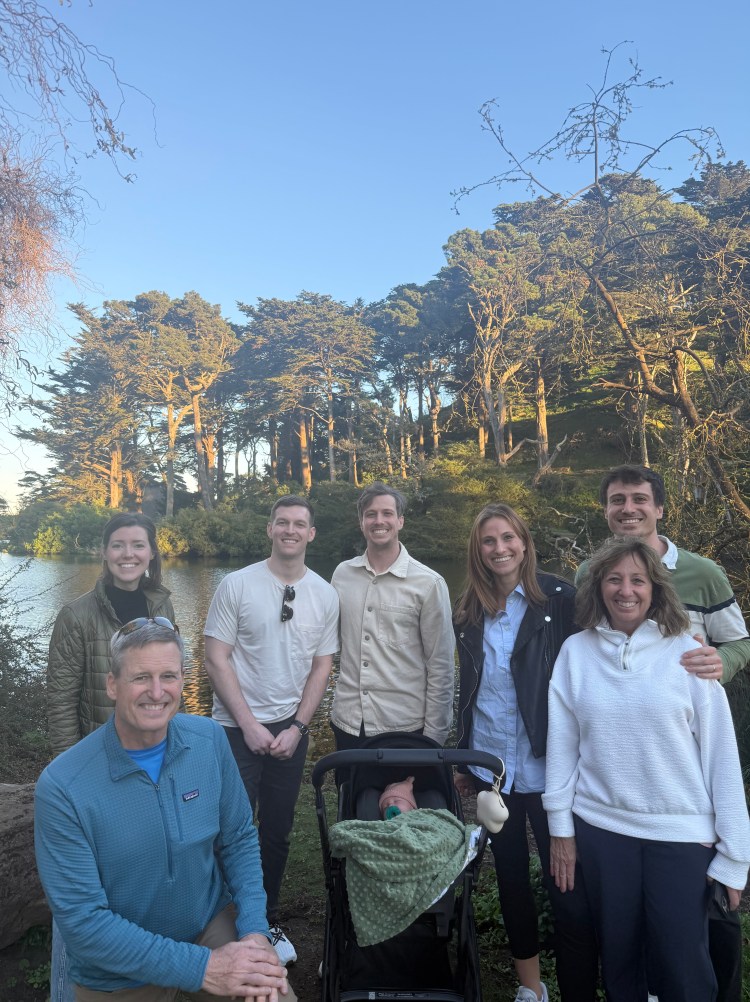
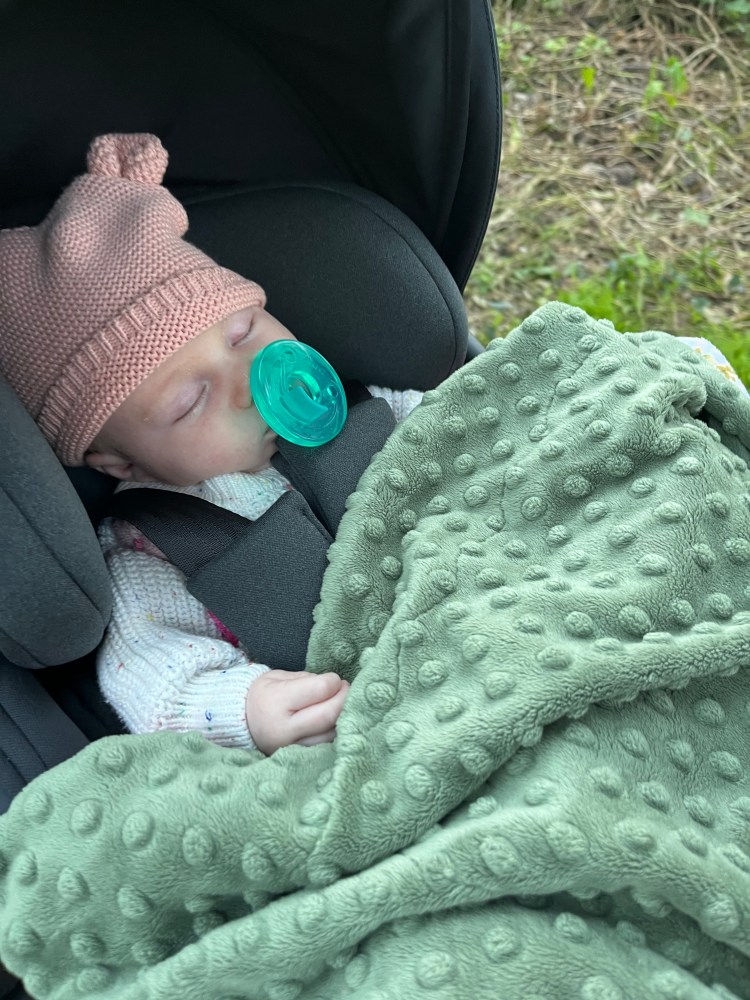
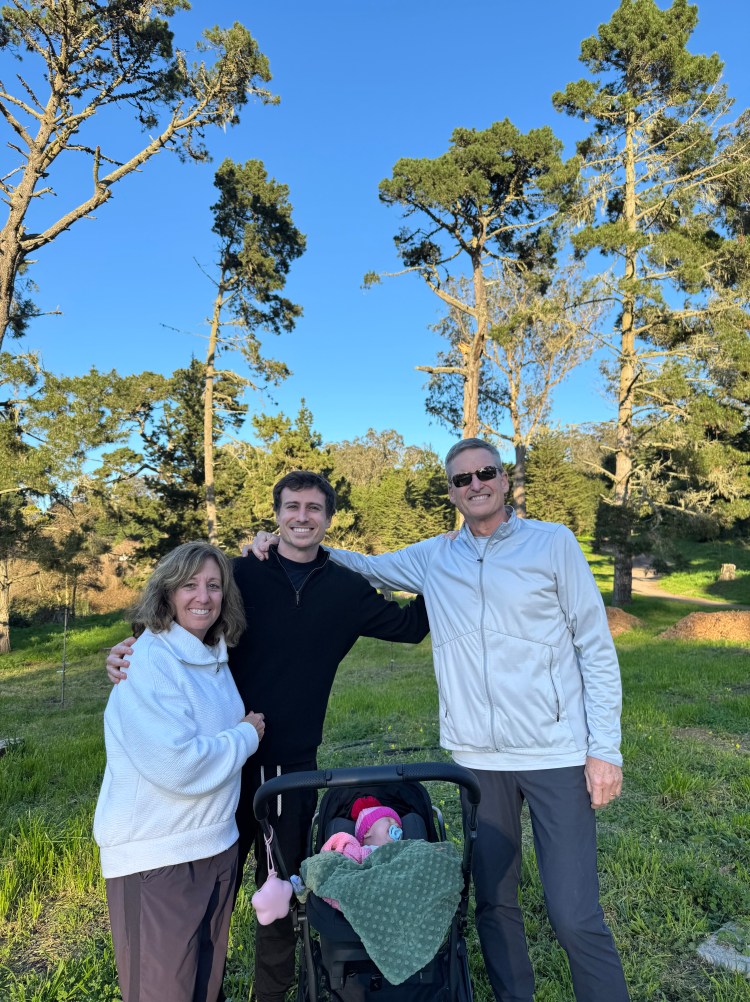
Lori and I extended our trip to see our brand new grand daughter, our son and daughter in law. They are going through a steep learning on how to be mother and father and child. I loved that they seemed to be making it a beautiful experience. Again we were grateful and inspired.
You can get stuck in the middle thinking life just keeps going on forever and forget your priorities. This trip was a marvelous way to be reminded.
By Jim Dickens December 19, 2025
When we left our oldest at college, I was unexpectedly emotional. I failed to realize until the moment that our son was leaving us to start his own life. It was not just another first day of school. Without foreseeing the moment, you are unprepared and the sudden realization can be very emotional.
My friends who are already grandparents told me it was the greatest. I thought about it and discounted it. I knew from parenting that new borns looked funky and were incapable of doing anything. Well now I am a grand parent and I have to admit I was wrong and my friends were right.
We were invited to come to the hospital and be there when our grand child was born. So we used our “go bags” and flew to San Francisco arriving at he hospital 4 hours before the birth. We got to hang around and go through the play by play. Thankfully it all worked out well with baby and mom healthy. And well, I was overly emotional ending with joy.
I didn’t anticipate watching our kids go through the roller coaster of anxious anticipation, pain, relief and joy. Also, there is the magic of a new life appearing suddenly. Being very attached to the kids I rode the roller coaster with them. It was a great and powerful emotional ride. Understanding this connection now, I realize the birth is just the beginning and the emotional connection will continue.

Jim Dickens December 2025
Go Bag

What situation would cause you to pack a go bag? If you’ve watched enough action drama you know that people often pack “go bags” so on a moments notice they can travel to save the world from destruction or solve the crime of the century. Well Lori and I now have them for a different reason.
Our go bags are packed because we have been invited to come to the hospital for the birth of a grand daughter, our first grand child. It’s a marvelous chance to have some more awe in our life. However, we live in Chicago and our grand daughter will be born in San Francisco some time soon. We will grab our go bags, head to the airport and board the next flight.
Our friends have all told us what a great thing grand children are. We are pretty happy with the current situation. But we trust them even though they struggle to describe the greatness exactly. It will be fun to do the go bag thing. But we are looking forward even more to a new stage, being grandparents, and thrilled our kids will have the joy of parenting.
Jim Dickens October 2025
Bhutan: The Adventure
Our tour leader, Jim, said, “Get ready this will be big boy fishing.” I think he was saying it to me because it soon became clear all the others were experienced big boy fisherman and could handle it easily. We were the first group going to the first fishing lodge in Bhutan. It was a great privilege to be the guinea pigs.

Besides my buddy Pete and me, there were four others. Jim, the CEO of the largest fly fishing travel company, who has fished all over the world; Flint a skier, blue water fisherman, and golfer who has been from the Seychelles to Cuba with Jim on other big boy fishing trips; Chris who once took a semester off of college to drive through Mexico with sea kayaks to Belize to spear his fish dinner everyday or starve; and Scott, a gear geek, an accomplished snowboarder, mountain biker and e foil rider. All are expert fly fishermen.

In 2007 our host, Bryant was working for the World Wildlife Fund when the Bhutan government asked him to do a feasibility study on fly fishing tourism in Bhutan. He explored and fished around the country for over a decade and then got permission to found Himalayan Fly Fishing, an outfitter that does river raft fishing week long camping trips. Subsequently, Bryant and a couple of Bhutanese guide partners built a fishing lodge. Bryant and Jim agreed Jim would bring a group to be the first lodge guests.

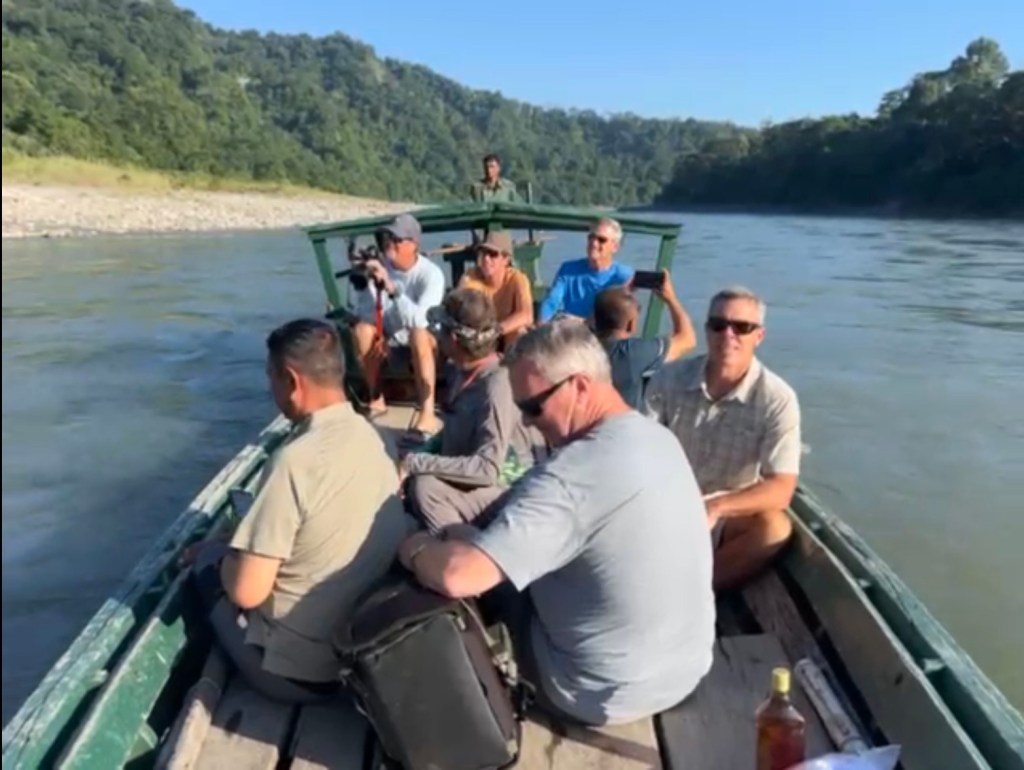
So we adventured in magical Bhutan. We kept deciding not to fish because we saw something else. We were supposed to fish for trout in the alpine Haa Valley but we came across a carnival with exotic things like sword fighting demonstrations. So we cut our fishing time down to about 90 minutes and spent time at the carnival. We were supposed to fish for 6 days in the jungle but only fished for five. Instead we went to a ranger station in the national park where we saw an elephant off in the distance, some wild water buffalo, langur monkeys, barking deer and a 7 foot cobra. We stopped to see the King and Queen depart on a plane in Gelephu.

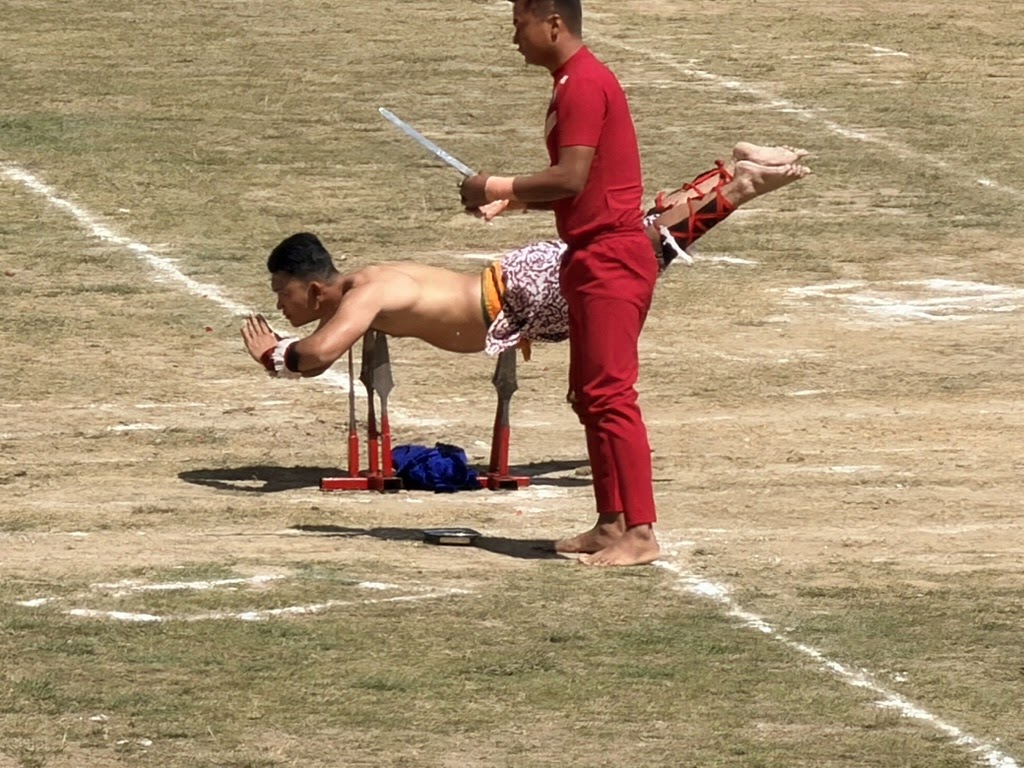

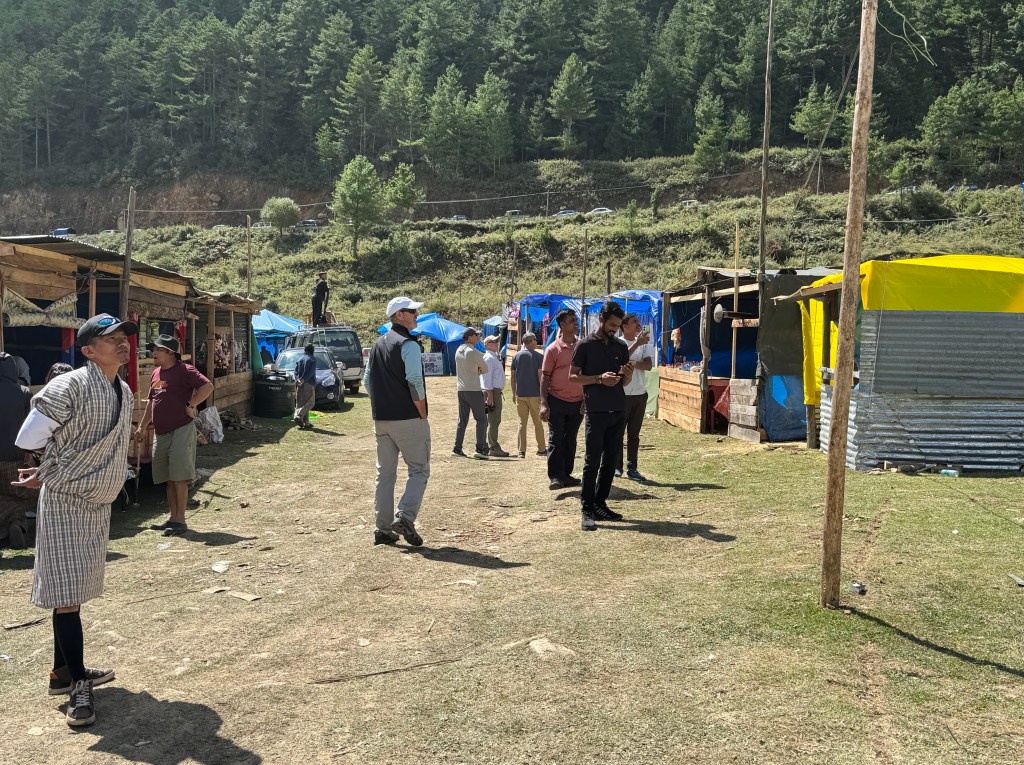
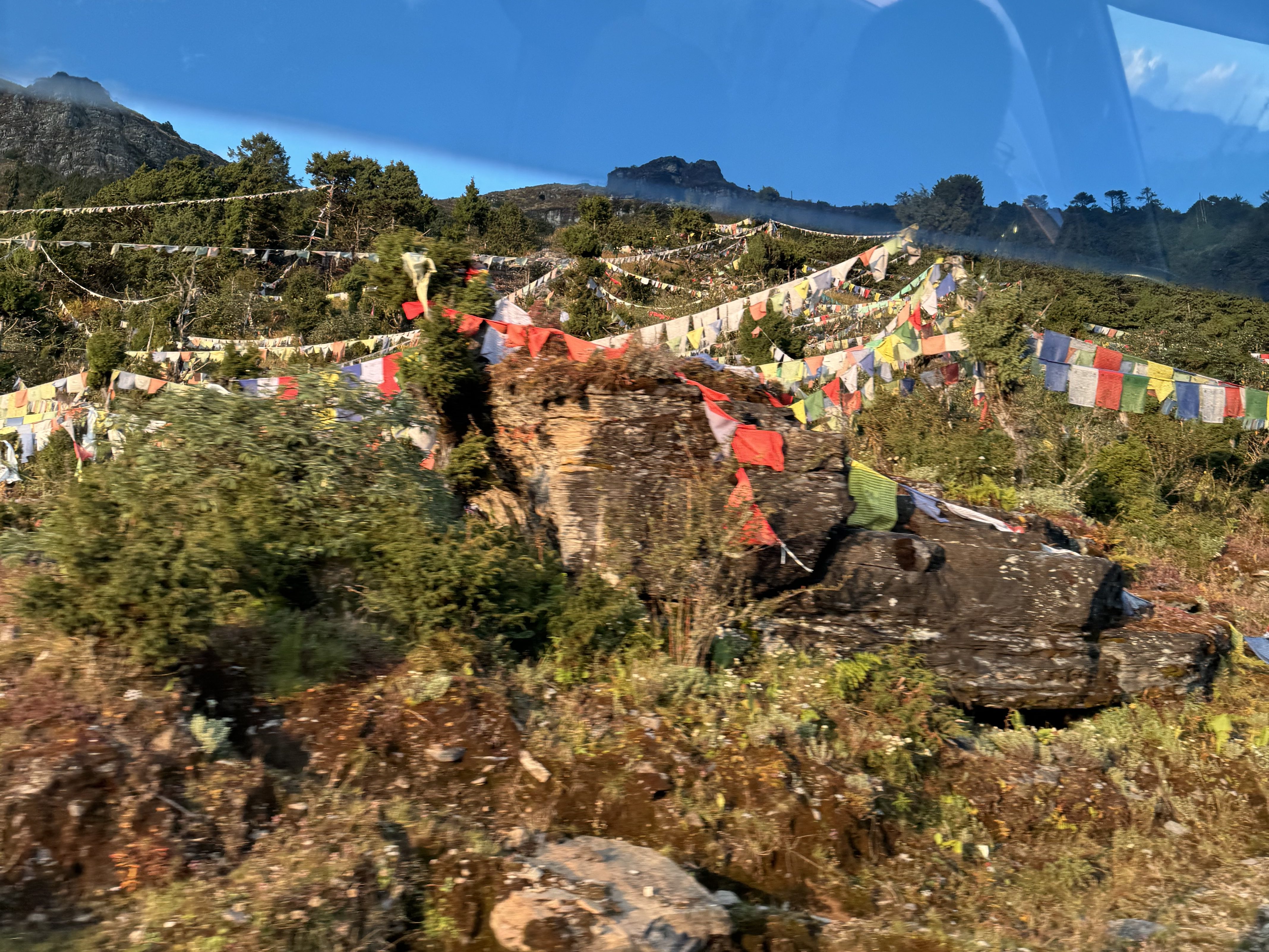


We did fish hard, rafting down rivers with rapids, and clambering down jungle river banks following our guides who kept the paths open with their patangs. We traversed suspension bridges and climbed over boulders. We caught the revered chocolate masheer and the sacred golden masheer. Amazing fish that fight above their weight class but are also pretty big to start with. Luckily we had drivers and guides that helped us at every turn and kept us safe. It is an amazing but wild country.

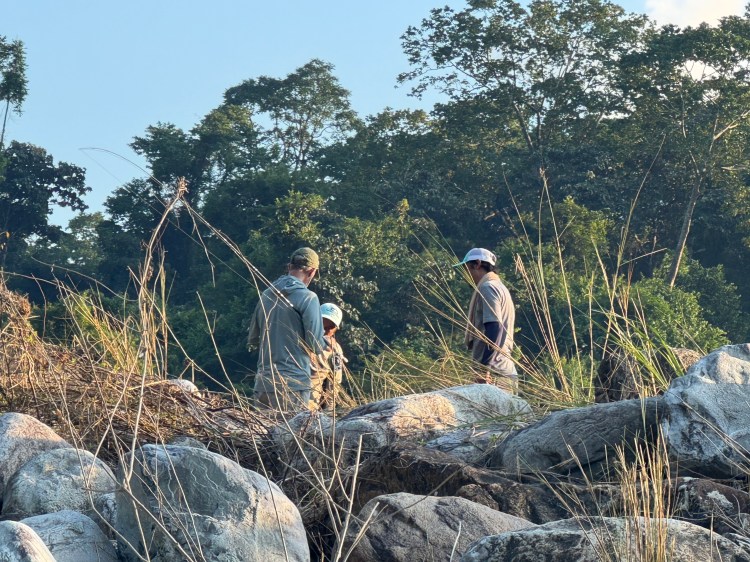


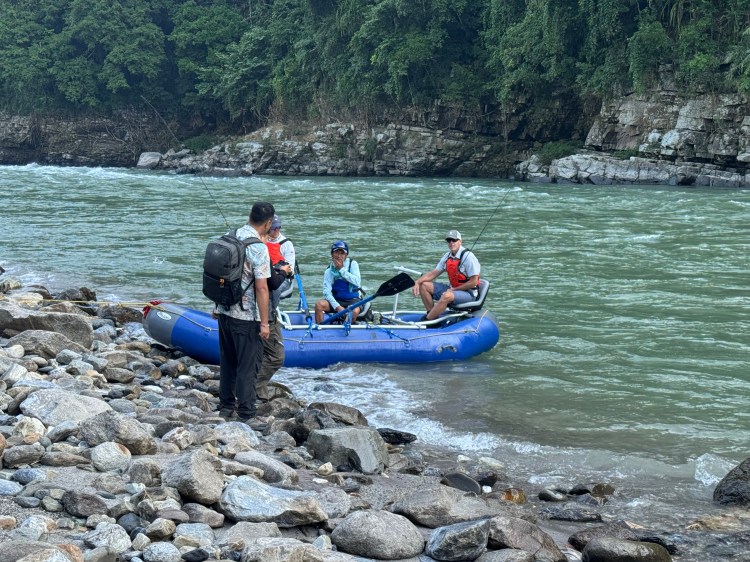
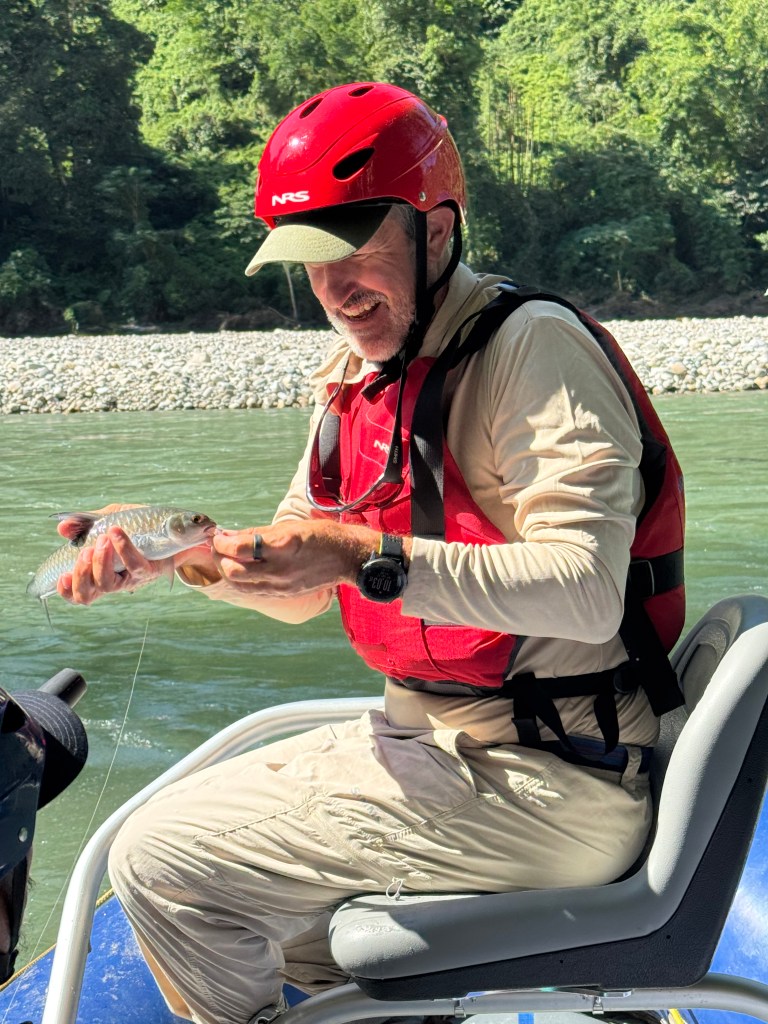
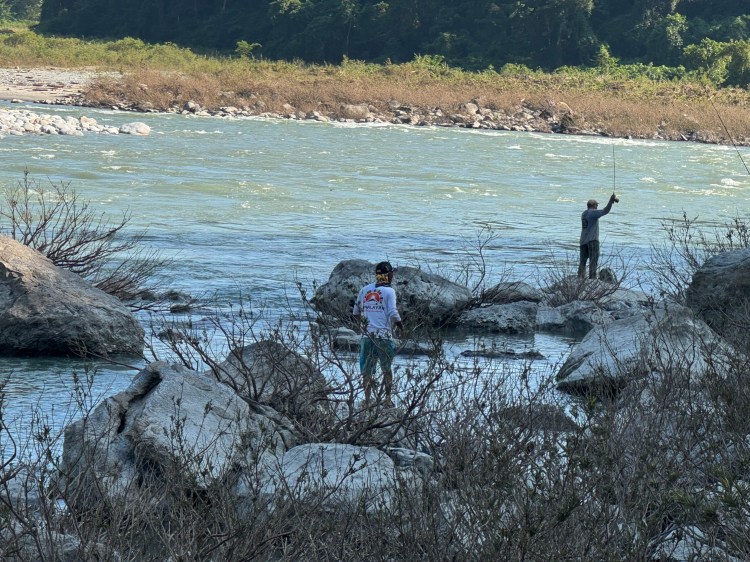

We ate the delicious national dish, ema datshi, that is so spicy you have to stop even though you want to eat more. We went to the tourist favorite Tiger’s Nest and the largest buddha statue in the world. The group took a helicopter to get from the lodge back to the airport and saw the Himalayas, our river lodge and the largest buddha statue from the air.
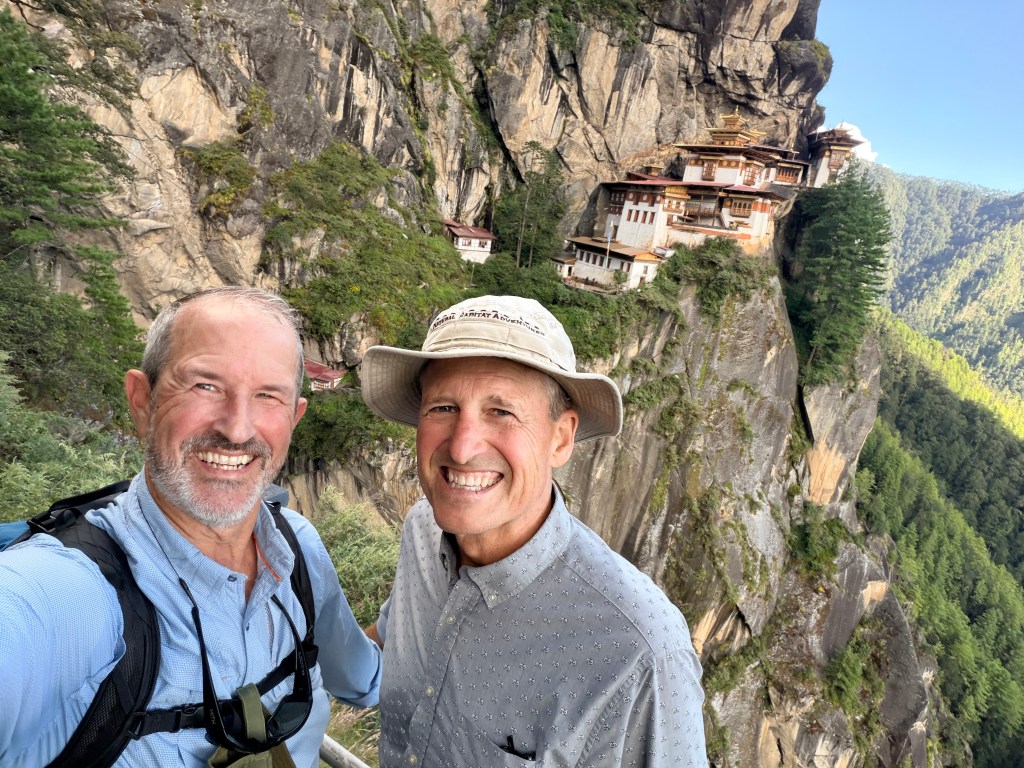

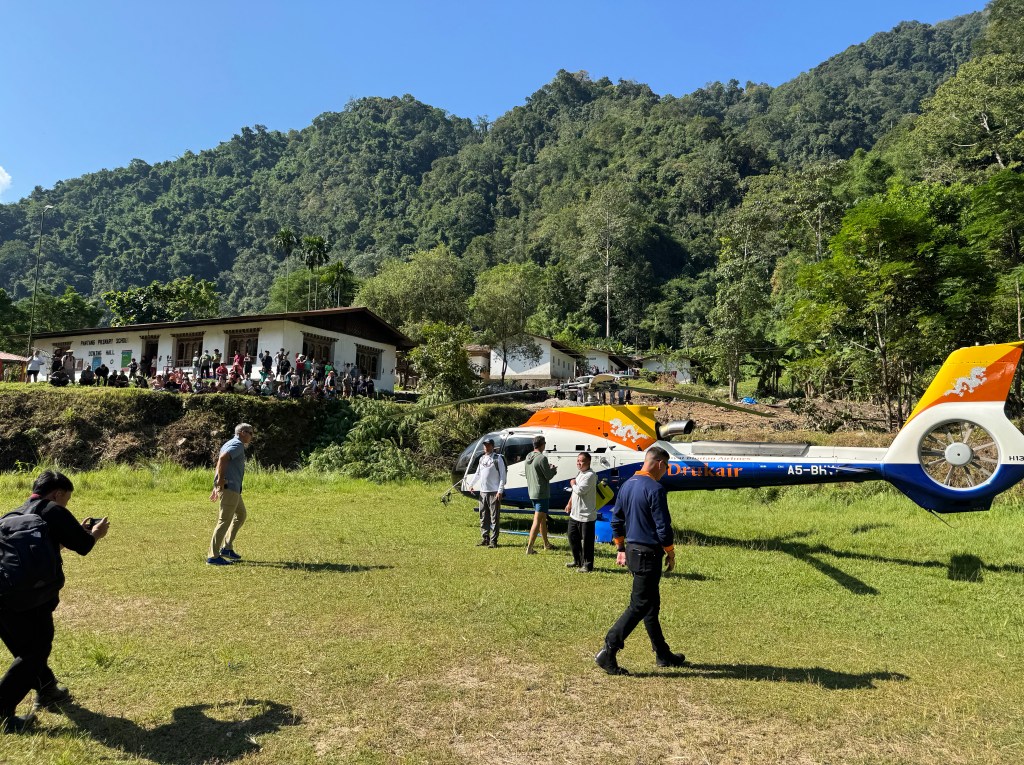
Everywhere we went we were helped with grace, patience and energy. Our guides, lodging staff, and even people we met walking around helped us. The culture here is distinctly different in positive ways from anywhere else I’ve been. It’s on the do again list with my wife, Lori. I hope Bhutan only changes for the better and remains wonderfully exotic.
It felt like “big boy fly fishing”. Being the first tourists floating the river, crossing the bridge, climbing the hillside or flying that helicopter route made you wonder how it would turn out. It felt wilder and less predictable. Learning to navigate the terrain and fish the rushing river required lots of energy and experience. Don’t come here until you are ready but definitely come here.
Jim Dickens November 1, 2025
Like many westerners who visit Bhutan, my visit was profoundly impactful. More so than any other country I have visited. And the impact comes for many reasons not a single thing. I’ll break it in two, the land and the people.
The Land

Bhutan is 90 miles north to south and 150 miles east to west at a subtropical latitude. It’s altitudes go from over 24,000 feet in the north to less than 1000 feet in the south. The whole country seems to be dangerously steep. Over 60% is forest with very few roads. There is incredible biodiversity in such a small country. Alpine evergreens, yaks and snow leopards are found in the north while jungles with elephants and tigers are found in the south.

I have trouble catching my breath hiking in the northern altitude and fish a jungle river with monkeys in the trees in the south. The size of the mountains and the density of the jungle is surreal. The steepness of the enormous mountainsides and velocity of the ripping large rivers is like nothing I have ever seen. One of our guides sadly drowned rafting the Manas River a day before we were to fish with him. The scale, the beauty and the pristine environment are new and amazingly beautiful.

The People
Bhutan is about the safest place you can visit despite being about the poorest. It is an interesting paradox that people have freedom of movement and speech and no castes but have all kinds of rules regarding dress and architecture and how you should live. Bhutan is desperate to retain it’s cultural identity while facing the advance of technology and interacting with the rest of the world.

All citizens we meet are calm, polite, speak quietly but are friendly. Everyone seems to know everyone and help each other in an almost communal way. The city has no homeless, no starvation and very little trash. People are literate and almost all practice a tibetan style of Buddhism. Most speak a good deal of english. There is lots of manual labor going on everywhere we look.

Bhutan is a monarchy evolving to an English style democracy. The king and queen seem to be loved and respected. It sounds like they are trying to be humble and benevolent. There are less than 800,000 citizens and tourism is highly managed. They don’t want tourism trashing the country and corrupting the culture.
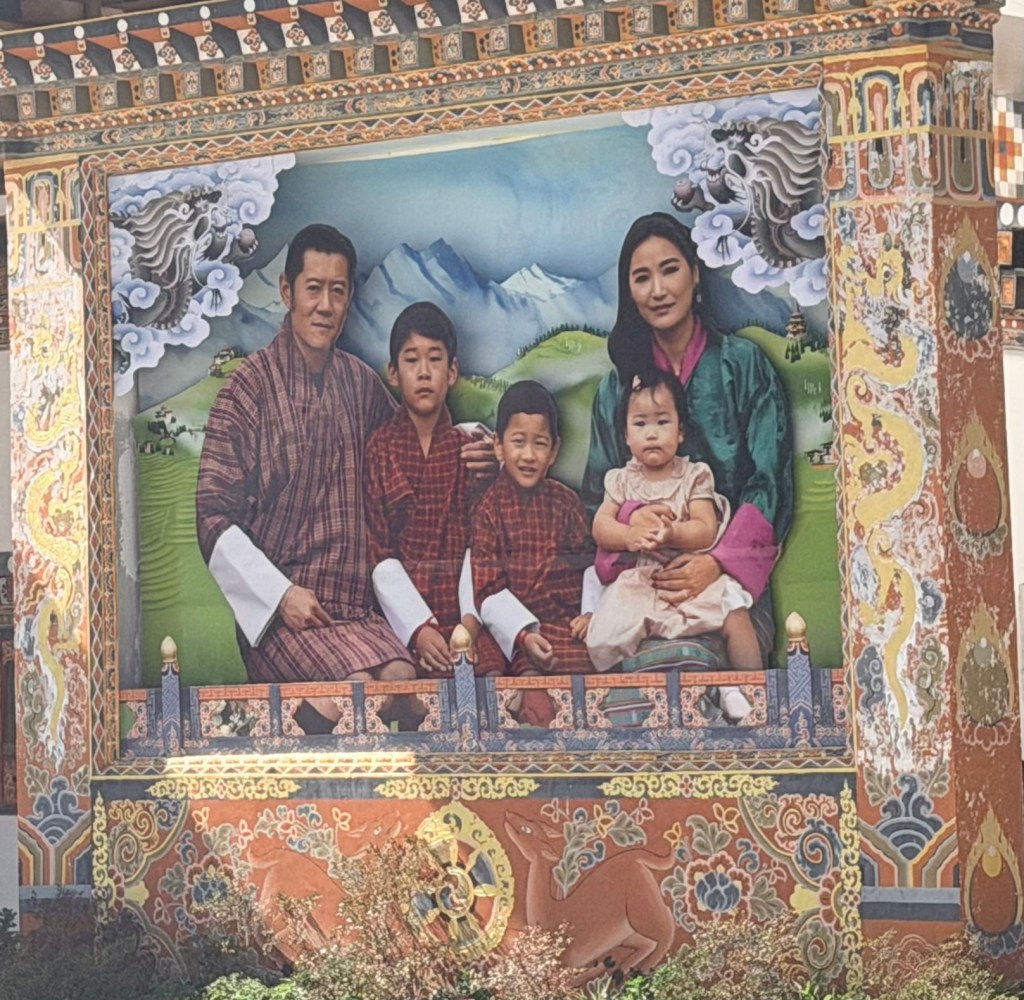
The Land and the People
Bhutan is maybe the only country that is carbon negative. Following their Buddhist practice there are laws against killing anything. They have set aside large areas to remain wild. Law also mandates that more than 50% of the land remains forested. The people seem to care and live with the land instead of conquering it. For example, when a tiger starts eating a farmer’s cows he is compensated and the tiger is never euthanized. The farmer then either decides not have cows or moves them somewhere safer.

I hope you can understand that being in this environment for a couple of weeks can have some very positive effects on how you live your life. It can adjust how you treat others and nature. I know this sugar coats Bhutan because there are lots of exceptions to my descriptions. Regardless, the visit was a strongly unique experience in mostly pleasant ways, I hope any positive lifestyle changes stick.
By Jim Dickens October 29, 2025
So I asked Brenda,” How do you get to Paro?” and she said, “Most fly in from Kathmandu.” And, I thought to myself, “How in the hell do you get to Kathmandu?”. It’s not a United Airlines destination. Brenda was my coordinator for a cultural/ fly fishing adventure.
When you google flights from Chicago to Paro no results pop up. So I asked ChatGPT help and it returned nonsense. I was told there was a travel agent who would create my itinerary for a fee but I refused thinking I could customize it better myself and the fee felt frivolous. That was probably a mistake.
For anyone wondering, “Where is Paro?”. It is in Bhutan. If you are still wondering where Bhutan is, it is next to Nepal, India, and Tibet (now part of China). Still wondering, please see a world map. Bhutan is the size of Switzerland and has much taller mountains.
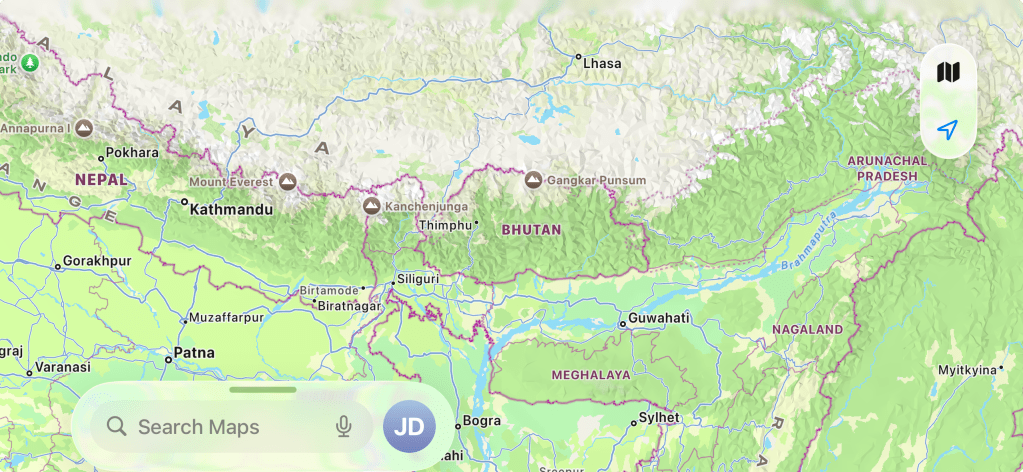
My initial itinerary had me on Air India to Delhi, India connecting to Kathmandu, Nepal overnighting and taking Druk Air to Paro. Druk Air is unconnected to any other airline and it is the only airline that flys into Bhutan. It is owned by the King of Bhutan. My itinerary did not hold up.
Air India had a fatal crash in Delhi shortly after I made my reservation. Then Air India unceremoniously, cancelled my Chicago to Delhi leg but left the Delhi to Kathmandu in place. The cancellation wasn’t because of the crash but because of a change in schedule. It took me over an hour on hold to find out the change in schedules would not allow me to get to Kathmandu on the right date and time. So I cancelled all flights and back to square one.
After extensive research of going west or heading east, I finally found Turkish Airlines, Chicago to Istanbul and Istanbul to Kathmandu. I slept on the decided itinerary and found the flight to Kathmandu had filled while I slept. However, I could fly a day later, land in Kathmandu and make a tight connection. I decided to carry on and chance it.
So I packed for over two weeks abroad in carry on luggage with my fishing rods attached to my back pack. I was the guy you roll your eyes at when they board with too much luggage.
The extra leg room promised was a myth on a 13 hour Istanbul overnight flight. After dinner I fell asleep for a few hours. I awoke to find my reading glasses had been taken away with my dinner tray. There was a compass on the wall showing the direction to Mecca. Things were getting foreign but the flight was on time.

The Istanbul airport international terminal is an eyeful. There are flights to evil axis cities like Moscow and Tehran. There are people in all kinds of dress, Thobes and Burka, halter tops and sneakers and everything in between. There are acres and acres of luxury stores and restaurants, more than I’ve seen in any other airport. However, there was not a pair of reading glasses to be found and Coke Zero was 6 euros for a small can.
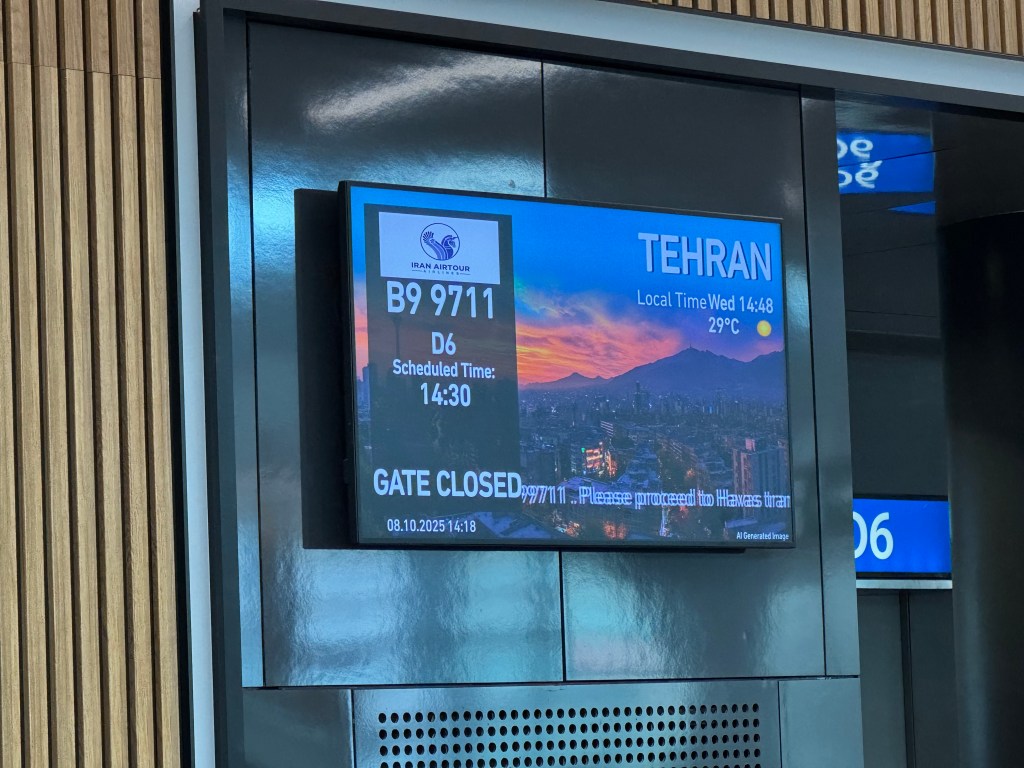
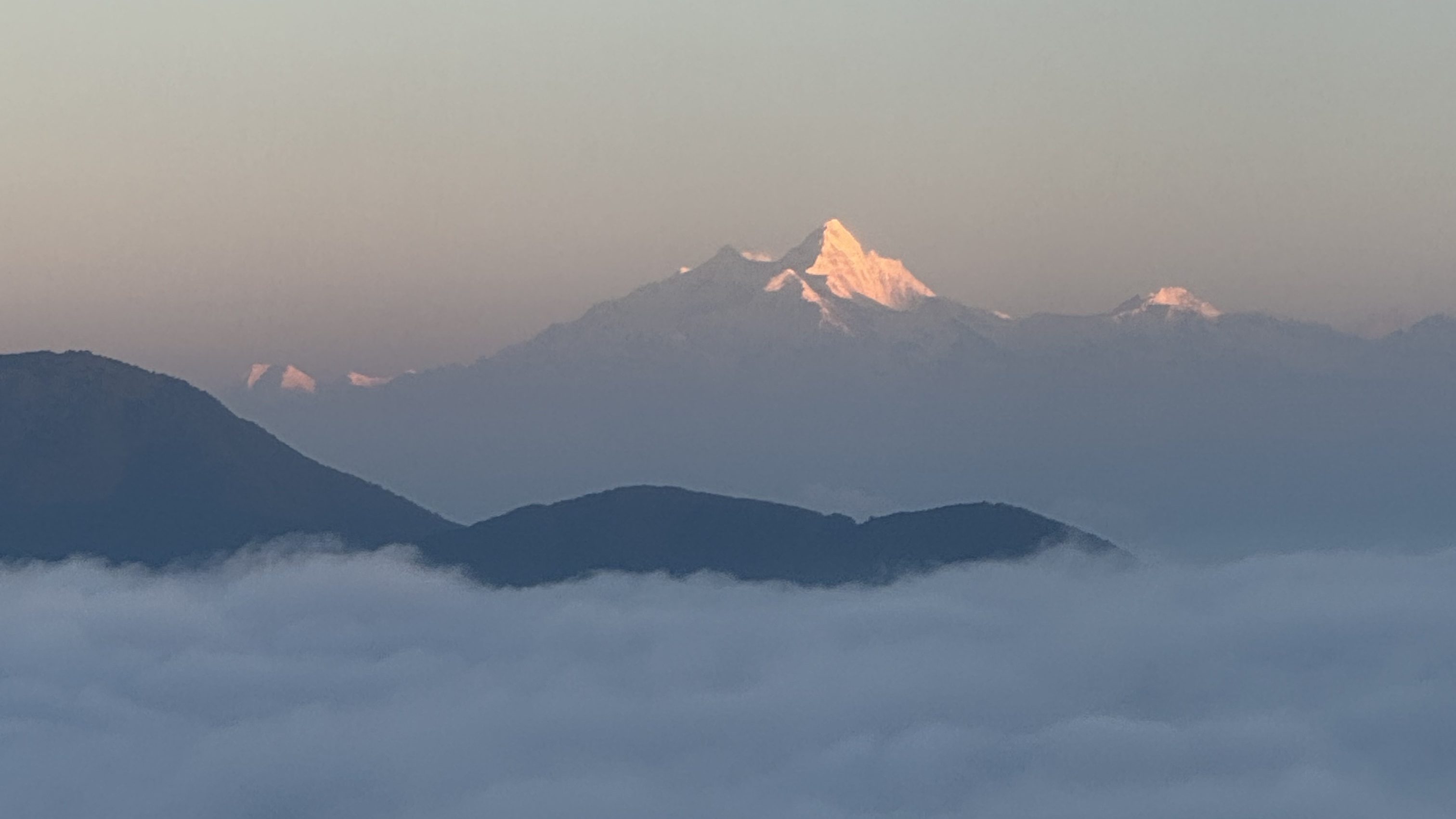
After a 5 hour layover, I flew 9 hours overnight again to Kathmandu. Extra leg room was real, they do a good job with smoked eggplant. Slept a little more and landed on time. Got to see the Himalayas at dawn rising over the clouds, amazing.
Kathmandu Airport was confusing, dirty and shabby. Feeling time compressed, I wandered around but managed to find my way to Druk check in with 30 minutes to spare. Thankfully I got to meet the other five fellow fly fishing adventurers there including my buddy, Pete. Some of my anxiety subsided.

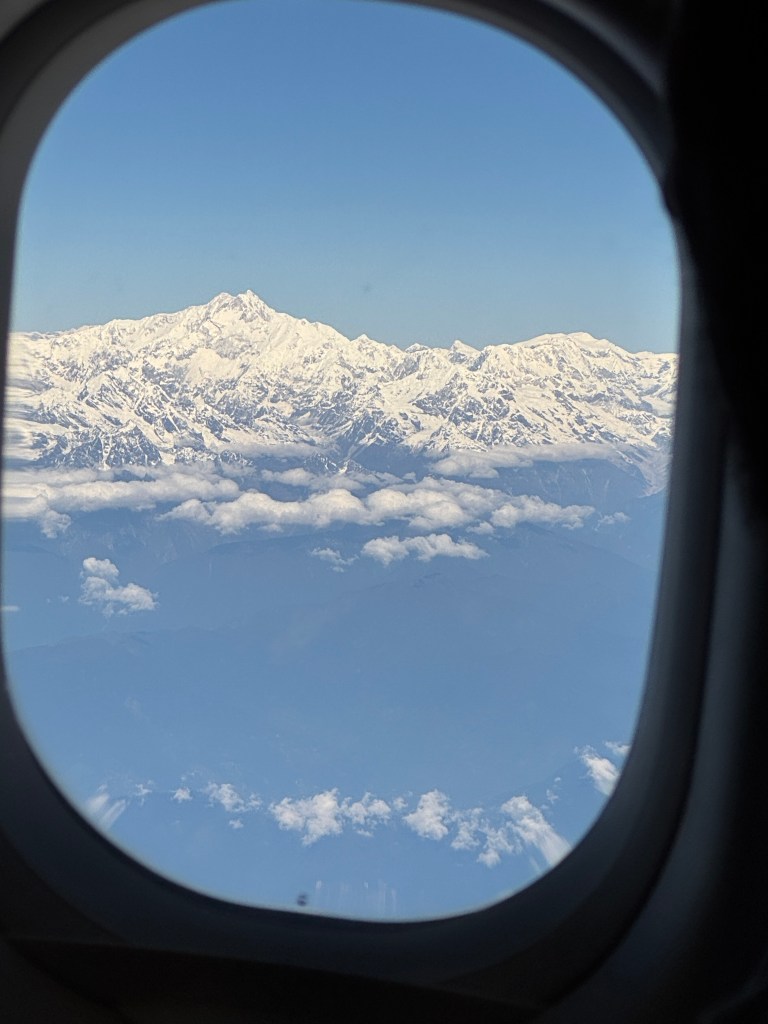
Druk Airlines was new, clean and uncrowded. We had views of the Himalayas all the way in including the landing. Apparently there are only 9 qualified pilots who can swoop into Paro valley and stick the landing. The Paro airport terminal was like being invited into someone’s well kept friendly home. It was a welcome change after anxiously traveling for 30 hours straight. Traveling alone through strange countries with tight connections on disconnected airlines was a whole new level of travel.
By Jim Dickens Late April 2025
I live in a nice suburb outside of Chicago safely and comfortably. I believe what I am told that some places in the Chicago area are the opposite. However when I listen to fellow suburbians putting forth problem/solutions I feel critical thinking they don’t really know. As I sat down to share my recent experience in Belize with my opinions about the country I found myself becoming the aforementioned unknowing prognosticator.

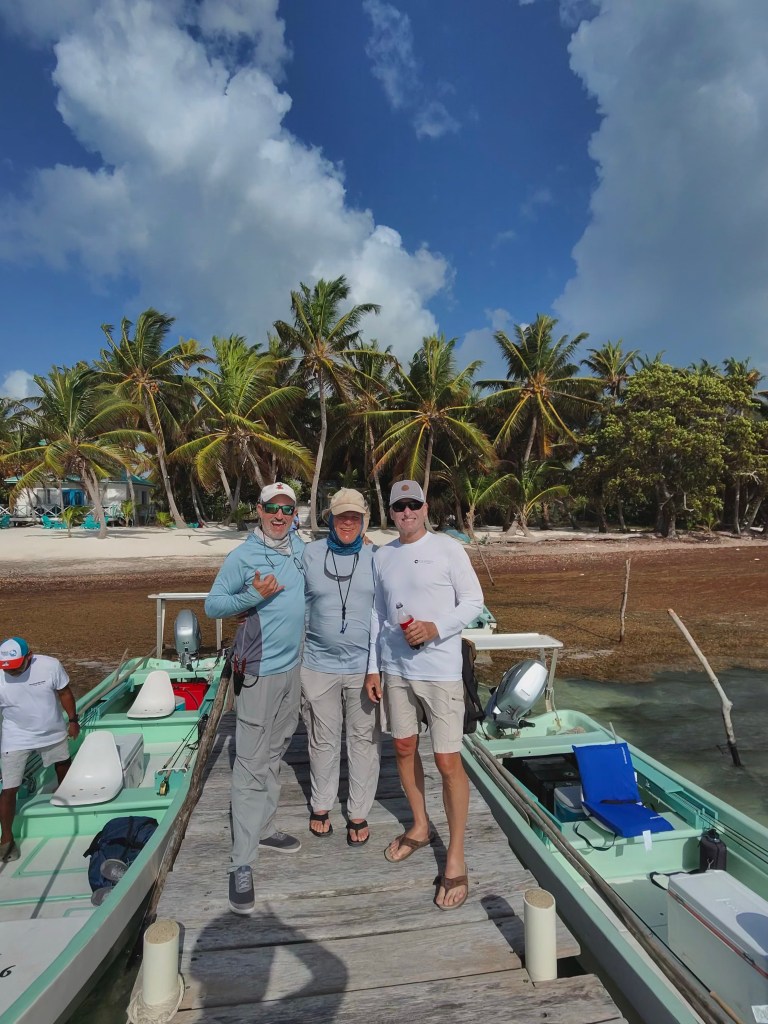
As usual I went fishing and fishing with buddies is about the funnest thing I do. My buddies Pete, Pete and Jon, all very experienced, stayed at a lodge near Belize City. It’s one of the original fishing lodges built in the 1960’s with giant planks of mahogany for floors and furniture and walls covered with memorabilia. The owners shared the history of the place and Belize.
Besides us, a there were a few others staying at the lodge. A pair of gentlemanly 75 year old Texas Aggies were there. At Pete’s urging, one played a few songs on the guitar for us. He sounded a little like Jerry Jeff Walker and used his hearing aids blue toothed to his iPad for lyrics chords and timing. As he enthusiastically played the The Everclear Song by Roger Creager, I thought I don’t really know this Aggie.
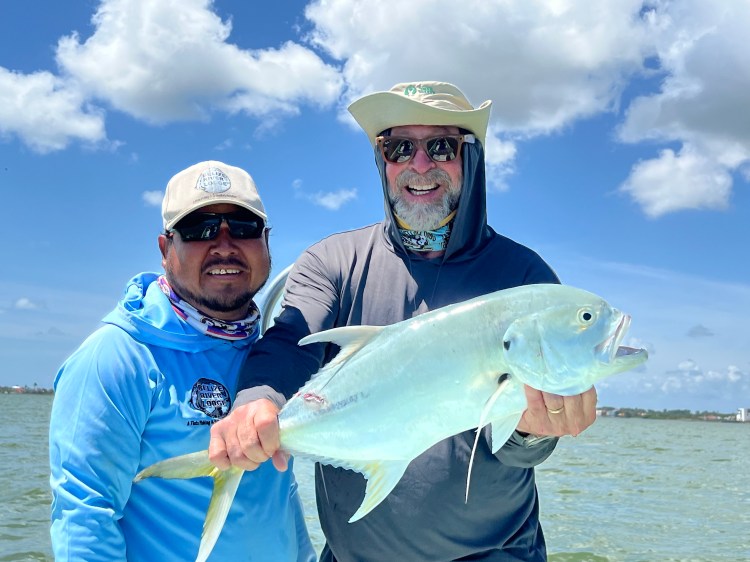
We fished in the river, on the flats and out on the reef We stayed out on Long Caye for a couple nights with guides and cooks as the only residents. We turned on the generator at night for light, showers and air conditioning. The fishing was streaky but we managed tarpon, snook, trigger fish, and bone fish along with an assortment of reef fish. We got to see a great array of wildlife, sharks and rays, manatees, jabiru storks and howler monkeys for example. It was a pretty good adventure.
The lodge staff was warm and fun to be around. Our fare had lots off fish rice and beans with a creole seasoning, very tasty. Belikin beer is drinkable and no one got sick. Higher than normal winds but pleasant temperatures kept us fishing everyday all day. Belize is protected from hurricanes by a barrier reef and its rivers are not channeled or dammed so buildings can be beach side and riverside pretty safely. It gets medium tourism and most get off a cruise ship and get back on. Farming is self sufficient but good natural portions are protected. Things seem pretty stable.
I like coming to Belize as it doesn’t feel touristy but you can safely be a stranger. But do I really know?
By Jim Dickens April 29, 2025
Montana land owners annex public lands by blocking access unless you have a helicopter. Pickleball courts have stacks of racquets on Saturday morning and you need to click your mouse exactly seven days in advance to get a good golf tee time. Public access is getting tougher as the country gets more crowded. Getting a prime time reservation at a restaurant or campground isn’t as easy as it used to be. However you can find exceptions.
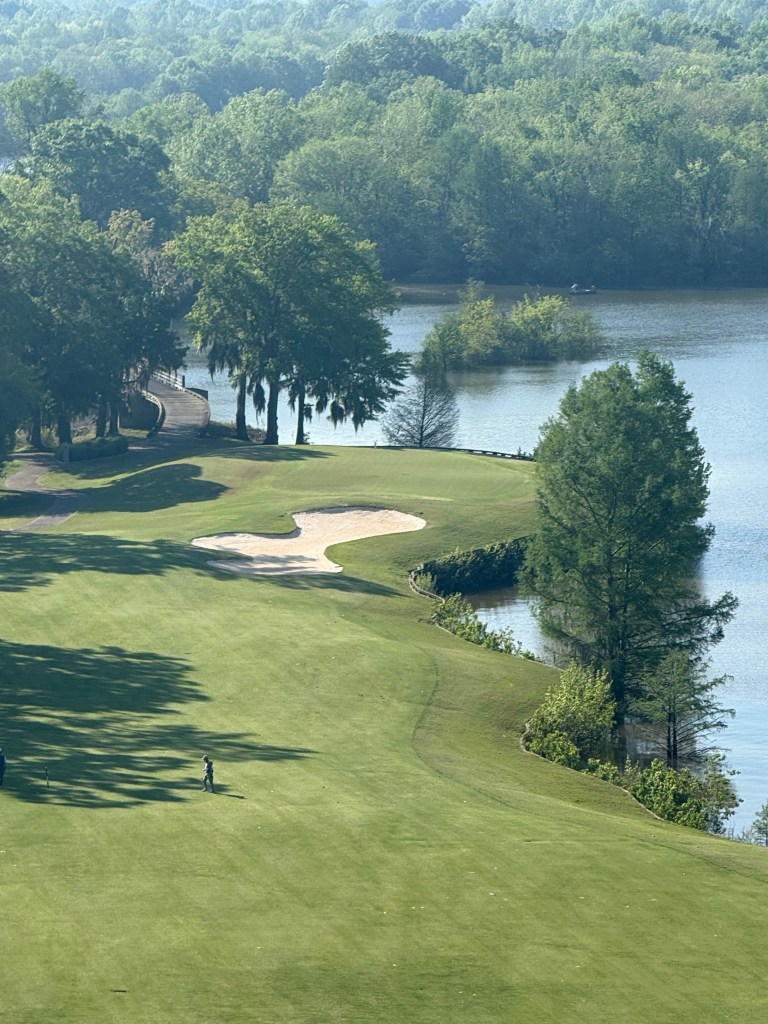
In the late 80’s, the Alabama Retirement System invested in the construction of a series of golf courses designed by the famed course architect, Robert Trent Jones. The System reasoned that in addition to being a good investment, the courses would create jobs and attract tourism increasing Alabama’s economic health. They built golf’s Field of Dreams and the golfer’s came. Alabama’s Robert Trent Jones Trail of golf spans the state with 11 locations, 26 courses and 468 holes of golf.

The Kid, Sparky and Girds joined me in Birmingham. We played four courses at three sites the second week of April. We bet, laughed and trash talked on the course every morning then watched the pro’s battle it out at the Master’s on TV every evening. The courses were affordable, great and easy to reserve along with lodging, food and drink. If you enjoy golf, I’d highly recommend it.

We think we may do it again and bring some friends. There are 22 courses we haven’t played yet.
by Jim Dickens San Francisco February 2025
I have a very low Art IQ. We have virtually no art in our house just pictures stirring happy memories. However friends and family are trying to help.
After returning from England, several days later we jetted to San Francisco to see our son Chris and his wife / our new daughter Sophie. Last time we visited in October, Lori and I stopped by the deYoung museum in Golden Gate park and enjoyed learning bits and pieces. Sophie planned a treat for us this visit.

Sophie, Chris, Lori and I visited the San Francisco Legion of Honor Fine Arts Museum on a fine clear day. The museum itself is architected beautifully with powerful Rodin sculpted bronzes that will appeal to even my art IQ. Then I ran across a painting that struck my fancy, a Canaletto. I thought about why I liked it and concluded I liked the precision and busy detail. The accurate perspective and the correct golden hour lighting and shadowing on a bustling Venice canal scene really struck me. I think I’ve moved from very low to low. Thank you Sophie.
(Canaletto Link so no picture here for legal reasons) https://www.famsf.org/artworks/venice-the-grand-canal-looking-east-with-santa-maria-della-salute
To help us update our new house, our talented friend Angela guided us. As she did she suggested she could provide us with two paintings. Angela has been an accomplished painter for many years and sold many of her creations. While we were in San Francisco Angela finished the two pieces.
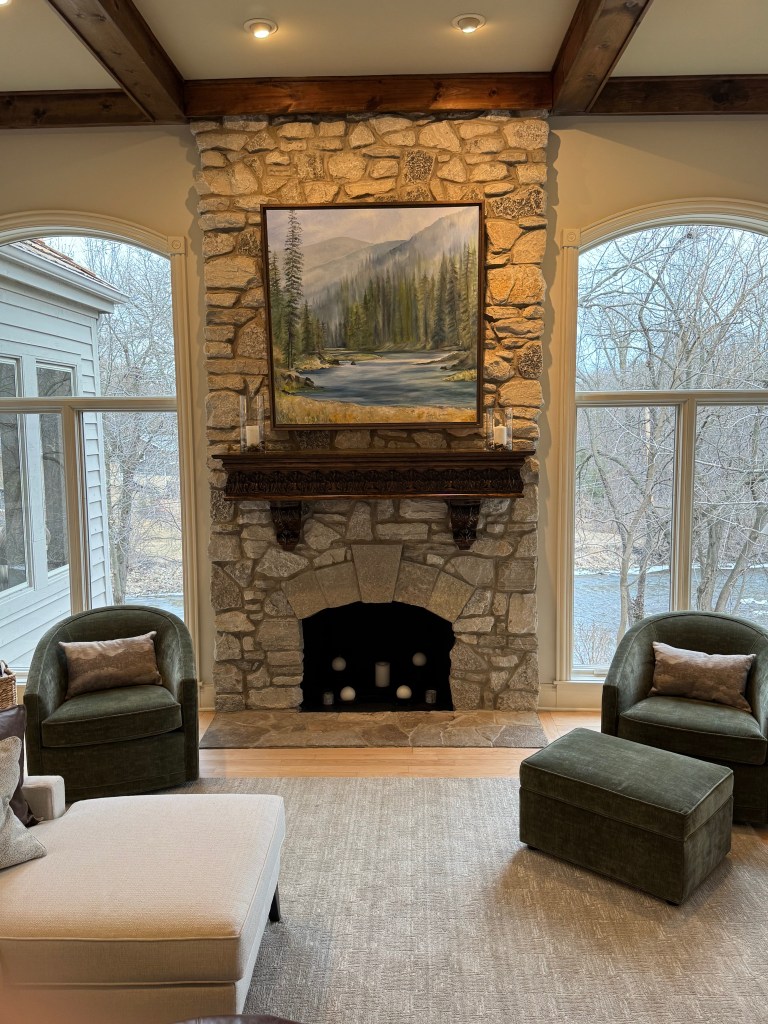
Over the family room mantle is a post impression of the Selway River in Idaho, an unsullied watershed I fished with two of my best friends. In the dining room is an abstract, Rings of Love, with rings linked for each member of our family. I find both striking, decorative and stirring happy memories. Thank you Angela.

So there is now art in our spartan home. Lori and I aren’t good with knick knacks. Maybe February is a turning point.



 R1T Tour