Jim Dickens November 1, 2025
Like many westerners who visit Bhutan, my visit was profoundly impactful. More so than any other country I have visited. And the impact comes for many reasons not a single thing. I’ll break it in two, the land and the people.
The Land

Bhutan is 90 miles north to south and 150 miles east to west at a subtropical latitude. It’s altitudes go from over 24,000 feet in the north to less than 1000 feet in the south. The whole country seems to be dangerously steep. Over 60% is forest with very few roads. There is incredible biodiversity in such a small country. Alpine evergreens, yaks and snow leopards are found in the north while jungles with elephants and tigers are found in the south.

I have trouble catching my breath hiking in the northern altitude and fish a jungle river with monkeys in the trees in the south. The size of the mountains and the density of the jungle is surreal. The steepness of the enormous mountainsides and velocity of the ripping large rivers is like nothing I have ever seen. One of our guides sadly drowned rafting the Manas River a day before we were to fish with him. The scale, the beauty and the pristine environment are new and amazingly beautiful.

The People
Bhutan is about the safest place you can visit despite being about the poorest. It is an interesting paradox that people have freedom of movement and speech and no castes but have all kinds of rules regarding dress and architecture and how you should live. Bhutan is desperate to retain it’s cultural identity while facing the advance of technology and interacting with the rest of the world.

All citizens we meet are calm, polite, speak quietly but are friendly. Everyone seems to know everyone and help each other in an almost communal way. The city has no homeless, no starvation and very little trash. People are literate and almost all practice a tibetan style of Buddhism. Most speak a good deal of english. There is lots of manual labor going on everywhere we look.

Bhutan is a monarchy evolving to an English style democracy. The king and queen seem to be loved and respected. It sounds like they are trying to be humble and benevolent. There are less than 800,000 citizens and tourism is highly managed. They don’t want tourism trashing the country and corrupting the culture.
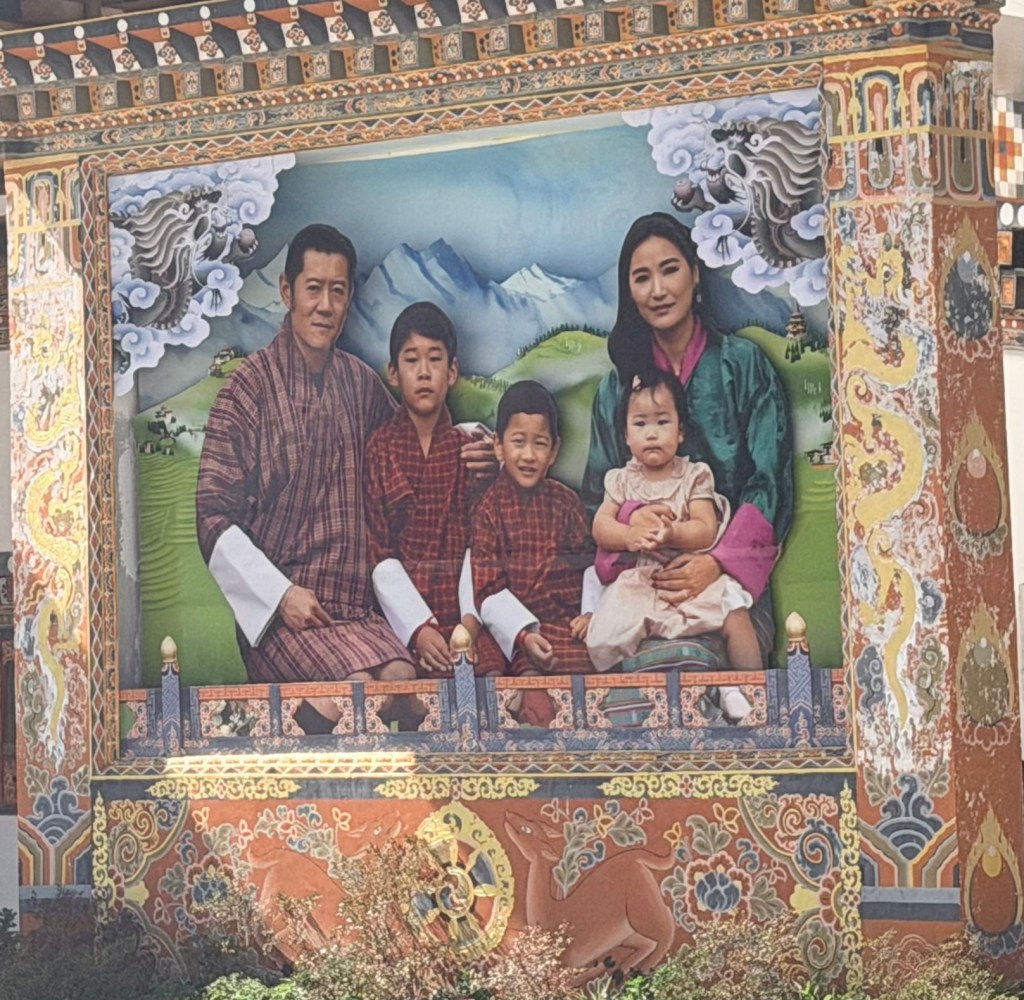
The Land and the People
Bhutan is maybe the only country that is carbon negative. Following their Buddhist practice there are laws against killing anything. They have set aside large areas to remain wild. Law also mandates that more than 50% of the land remains forested. The people seem to care and live with the land instead of conquering it. For example, when a tiger starts eating a farmer’s cows he is compensated and the tiger is never euthanized. The farmer then either decides not have cows or moves them somewhere safer.

I hope you can understand that being in this environment for a couple of weeks can have some very positive effects on how you live your life. It can adjust how you treat others and nature. I know this sugar coats Bhutan because there are lots of exceptions to my descriptions. Regardless, the visit was a strongly unique experience in mostly pleasant ways, I hope any positive lifestyle changes stick.
 R1T Tour